
DDM for Medical & Life Sciences
Digital Transformation: Medical Device & Life Sciences
In the medical and life sciences sector, staying compliant while keeping development moving is critical. DDM gives teams a single, organised system for managing product data, approvals and workflows. By keeping information connected and traceable, it helps reduce errors, maintain quality and simplify audits, so you can focus on delivering safe, innovative products.
We are trusted by:





Features of DDM
Powerful PLM for Medical and Life Sciences
Managing regulatory requirements while keeping product development on track is one of the biggest hurdles in medical and life sciences. DDM centralises your design data, documents and approvals so teams always work from the most up-to-date information helping with ISO 13485 and ISO 9001.
Additionally, DDM’s process and audit capabilities help medical device companies with FDA regulations 21 CFR Part 11 (Electronic records/electronic signatures) and 21 CFR Part 820 (Quality System Regulation).
Every change, risk assessment and CAPA action is tracked and linked to relevant products, giving full traceability without slowing down workflows. Built-in processes ensure approvals, electronic signatures and audit trails are captured automatically, so compliance is maintained naturally as part of daily work.

Regulatory Compliance Management
Keep every approval, record and update in one organised system with DDM. It helps support compliance with ISO 13485 and ISO 9001 so you can be confident that every document is ready for inspection at any time.
Document Control & Traceability
From design history files to device master records, DDM maintains complete version control and an unbroken audit trail. You will always know exactly who made a change, when it happened and why.
Risk & Quality Management
DDM makes it easy to log and track every nonconformance, complaint or audit finding in one place. Linked data shows the full impact while built-in workflows guide CAPA actions from start to finish. Risk assessments sit alongside product files so you can spot issues early and keep quality high.
Design & Change Management
With structured workflows for reviews and approvals, DDM ensures design changes are well managed and fully documented. Everyone involved works from the same, most up-to-date information.
Secure Collaboration & Supplier Management
DDM allows you to share accurate specifications with suppliers and partners while keeping sensitive data protected. This ensures efficient collaboration without compromising security.
DDM for Medical Device and Life Science PLM
From tracking changes to managing approvals and risks, DDM helps medical and life sciences teams stay organised, compliant and confident throughout the product lifecycle. Trusted by regulated industries worldwide.
Case studies
Brilliantly easy & brilliantly powerful
Bioquell
Lorem ipsum dolor sit amet

Instro Precision
Lorem ipsum dolor sit amet

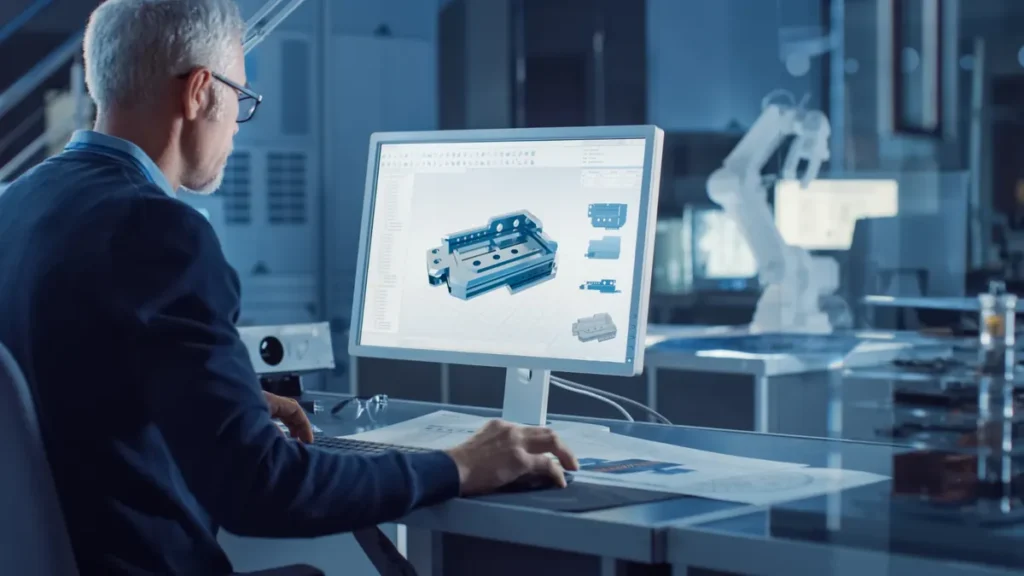
Powerful tools built for product development-all in one platform
Achieve Compliance Without the Chaos
Capture every change, approval, and document in one traceable system. Whether you’re working to ISO, FDA, or internal standards, compliance is structured, auditable, and stress-free.
Boost Team Productivity
Keep everyone aligned with a single source of truth. Engineers spend less time managing data, and more time solving problems and innovating.
Cut Engineering Costs
Remove time wasted on chasing files, duplicating effort, or fixing miscommunications. DDM simplifies design workflows and eliminates manual overhead.
Reduce Waste & Increase Part Reuse
Easily find, track, and re-use existing components instead of reinventing them. Fewer duplicates, fewer errors — more value from every design.
Build a Smarter, More Scalable Process
Replace disconnected spreadsheets and legacy tools with a future-proof system that grows with you — from prototype to global release.

Get Products to Market Faster
With connected data, streamlined reviews, and fewer handoff delays, teams move from concept to production without hold-ups or rework.
Why Choose DDM?
When managing complex product data and workflows, the right PLM system can make all the difference.
Here’s what sets DDM apart:
300+
customers across 30 countries have manufacturing teams empowered by DDM
90+
years combined engineering and PLM experience across the DDM leadership team
30+
years of development, trusted by SMEs and global enterprises alike
3+
times Return on Investment customers are typically seeing deploying DDM
Proven Over Decades
With more than 30 years of development and refinement, DDM has been shaped by our manufacturing customers across industries, resulting in a dependable, scalable, world class PLM system.
Built by Engineers, for Engineers
Our leadership team have covered numerous roles across engineering, and its with this deep understanding of our customers and the challenges they face, that we’re able to architect a system so closely aligned to engineering.
Your Data, on Your Infrastructure
Whether you’re looking to deploy PLM on-premise or in the cloud, you are always in control of your data, on your infrastructure. And affordable perpetual or subscription licensing, helps keep DDM well within your PLM budget.
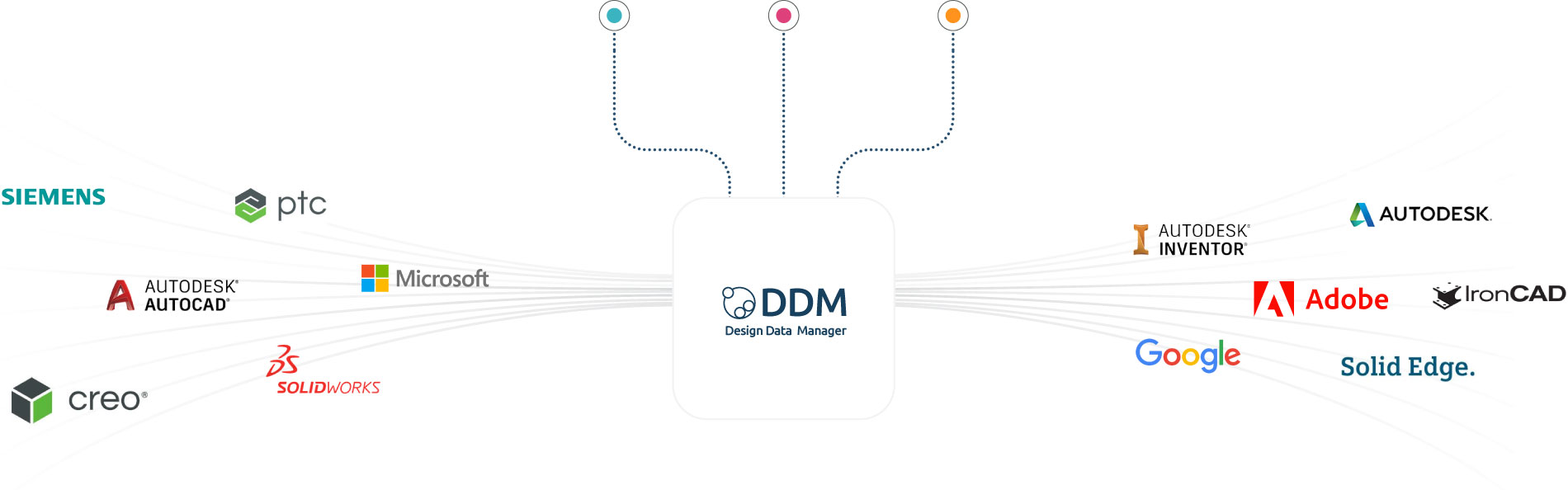
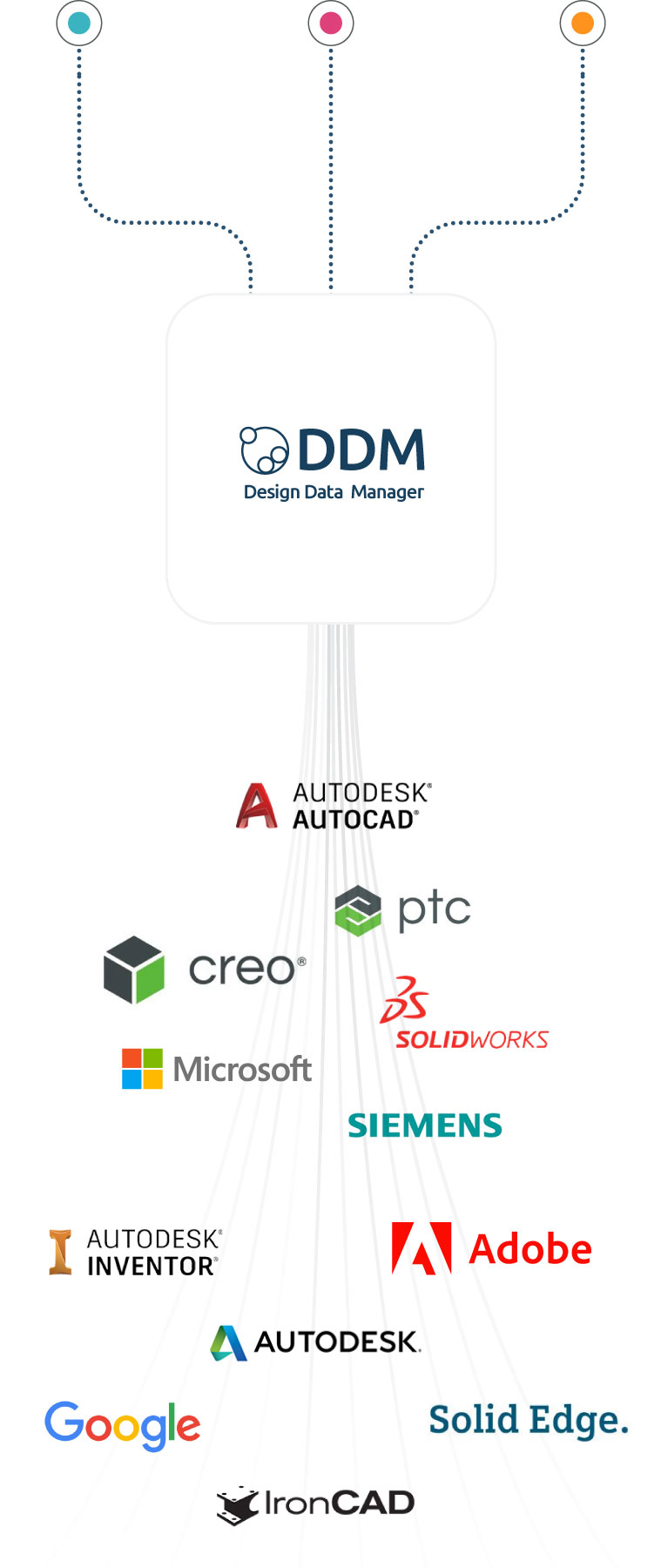
DDM connecting users across your engineering ecosystem
Audited and secure access to your PLM data, with granular end-user access controls and multi-factor authentication across clients, connecting users to their project data.
For CAD Users
Designers, Engineers, CAD Managers
With all the functionality of DDM Office plus direct integration with the CAD environment.
- Multi-CAD support (3D & 2D)
- Ribbon bar integration
- Automatic 3D and 2D neutral file creation
- CAD / DDM Parameter Mapping
- Support for Library / Toolbox parts
For Office Users
Approvers, Internal Teams, Project Managers
Full thick client for managing BOMs, documents, Projects, Tasks and Workflow.
- Comprehensive BOM management
- Full product structure / Where Used tools
- Non-CAD Office document lifecycle management
- Extensive Workflow for Business Process Management
- Assign tasks and track projects
For Web Users
Viewers, External Teams, Supply Chain
Browser based access, stay connected and informed anytime, anywhere.
- Read/write browser based secure access
- Configurable KPI dashboard
- Charts & Graphs
- Supplier / customer folders
What our customers think
Success with DDM
Used by your peers across the world, learn how DDM has delivered business value across industries — from defence to healthcare and beyond.

“We struggled for years with a paper system until we implemented DDM. Data management has become second nature, everything is stored and completed in DDM”

“It’s been very impressive! The ability of DDM to be very quickly adapted and configured to meet our business needs. It goes beyond just data control and CAD…”

Frequently Asked Questions
FAQs
Whether you’re exploring DDM for the first time or looking to get more out of your current setup, this FAQ covers the most common questions about our platform, integrations, setup, and support.
If you don’t see what you’re looking for, our team is always here to help.
DDM is built for engineers, designers, and manufacturers who use tools like SOLIDWORKS, AutoCAD, Creo, and Siemens NX. It’s especially valuable for small to mid-sized businesses looking for scalable data control without expensive IT overhead.
DDM is built for engineers, designers, and manufacturers who use tools like SOLIDWORKS, AutoCAD, Creo, and Siemens NX. It’s especially valuable for small to mid-sized businesses looking for scalable data control without expensive IT overhead.
DDM is built for engineers, designers, and manufacturers who use tools like SOLIDWORKS, AutoCAD, Creo, and Siemens NX. It’s especially valuable for small to mid-sized businesses looking for scalable data control without expensive IT overhead.
DDM is built for engineers, designers, and manufacturers who use tools like SOLIDWORKS, AutoCAD, Creo, and Siemens NX. It’s especially valuable for small to mid-sized businesses looking for scalable data control without expensive IT overhead.
DDM is built for engineers, designers, and manufacturers who use tools like SOLIDWORKS, AutoCAD, Creo, and Siemens NX. It’s especially valuable for small to mid-sized businesses looking for scalable data control without expensive IT overhead.
DDM is built for engineers, designers, and manufacturers who use tools like SOLIDWORKS, AutoCAD, Creo, and Siemens NX. It’s especially valuable for small to mid-sized businesses looking for scalable data control without expensive IT overhead.
Discover more and connect a DDM Expert
To understand how DDM can help you, contact us to talk to a product specialist, discuss pricing and book an online demo.